
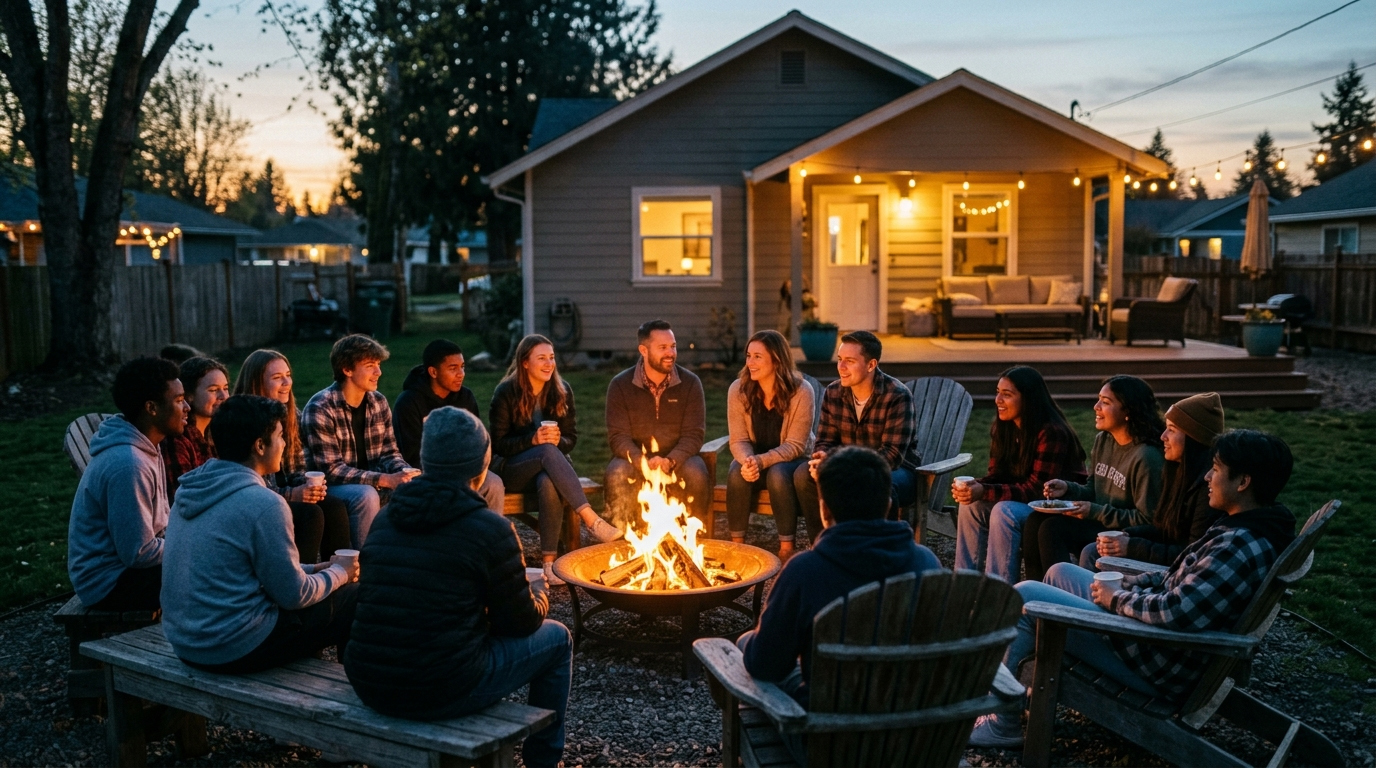
In my first five years of ministry in Marion, Indiana, my “office” wasn’t just a desk at the church; it was a living room filled with students.
The demographics of our town were tough. About 95% of my students came from single-parent households. These were families hanging on by a thread, with parents working double shifts just to keep the lights on. Because my own upbringing looked a lot like theirs, I felt a deep, soul-level connection to these kids. I knew their hunger wasn’t just for pizza; it was for stability.
As I navigated those early years, I came to a realization that might make some theologians sweat: I began to view the relationship as more important than the teaching.
Before you close the tab, hear me out. I still spent hours prepping messages and teaching with passion. But I realized that for a student who has never seen a healthy boundary or a functional home, a 30-minute lecture on “righteousness” can feel like a foreign language. They didn’t just need to hear the Truth; they needed to see it move.
Presence Precedes Persuasion
I realized that to lead these students, I had to build relationships. To build relationships, I had to be with them. And to be with them, I had to create a space where we could just… be.
Discipleship stopped being a curriculum and started being a lifestyle. It shifted from “listen to me” to “follow me.” This shift changed everything. We moved from the sanctuary to the sidewalk, getting into their worlds so they could eventually see ours.
The Power of “Sunday Night Fires”
My wife and I decided to open our lives up completely. We started something called Sunday Night Fires. The “programming” was nonexistent. Sometimes there wasn’t even a fire. It was just a house, some food, and an open door.
But for our students, it was a masterclass in Christian living. By being in our home, they saw:
- A Healthy Marriage: They saw how a husband and wife talk to each other when the stage lights are off.
- Intentional Entertainment: Back when everyone still “owned” movies, they saw what was on our shelves—and what wasn’t. They saw that you could be entertained without compromising your values.
- Sobriety and Standards: They saw what we chose to have in our house and what we didn’t, specifically, our choice not to have alcohol. In a world where many of them saw the negative fallout of substance use, our “dry” home was a quiet but powerful statement on freedom.
- Consistency: They saw how we kept our home and what we prioritized when nobody was looking.
They weren’t just learning about Jesus; they were watching what it looked like to be led by Him.
The Living Curriculum
In Youth Ministry, we often worry about having the perfect transition or the flashiest graphics. But for a kid who doesn’t know if their mom will be home when they get back, or a student who has never seen a man treat a woman with honor, you are the living curriculum.
Your marriage is a sermon. Your kitchen table is an altar. Your consistency is a prophecy of what their future could look like.
We have to remember that the life we choose to live in private has eternal effects on the ministry we have in public. If there is a disconnect between our stage persona and our living room reality, we aren’t just being hypocritical, we are stealing the students’ opportunity to see the Gospel in action.
Living a life that reflects Christ isn’t about being a perfect person; it’s about being a present person. When we invite students into our lives, we give them more than information, we give them a blueprint for a new way to live.

Kyle Wood
Director of Operations and Communication